
Learn how you can succeed with the students who need you most in ways you never thought possible.

In this thought-provoking book, renowned educator and learning expert Eric Jensen takes his most personal, profound look yet at how poverty and inequity hurt students and their chances for success in life—and how teachers across all grade levels and subject areas can infuse equity into every aspect of their practice.

This insightful, comprehensive guide also includes reflection prompts and downloadable tools and templates to help you move forward with implementation.

If we truly believe all students deserve a high-quality education, we need to commit to equity. It starts with each one of us. It starts with you.

 See the book's table of contents and read excerpts (PDF).

An Extraordinary New Resource

(if you work with students from poverty)

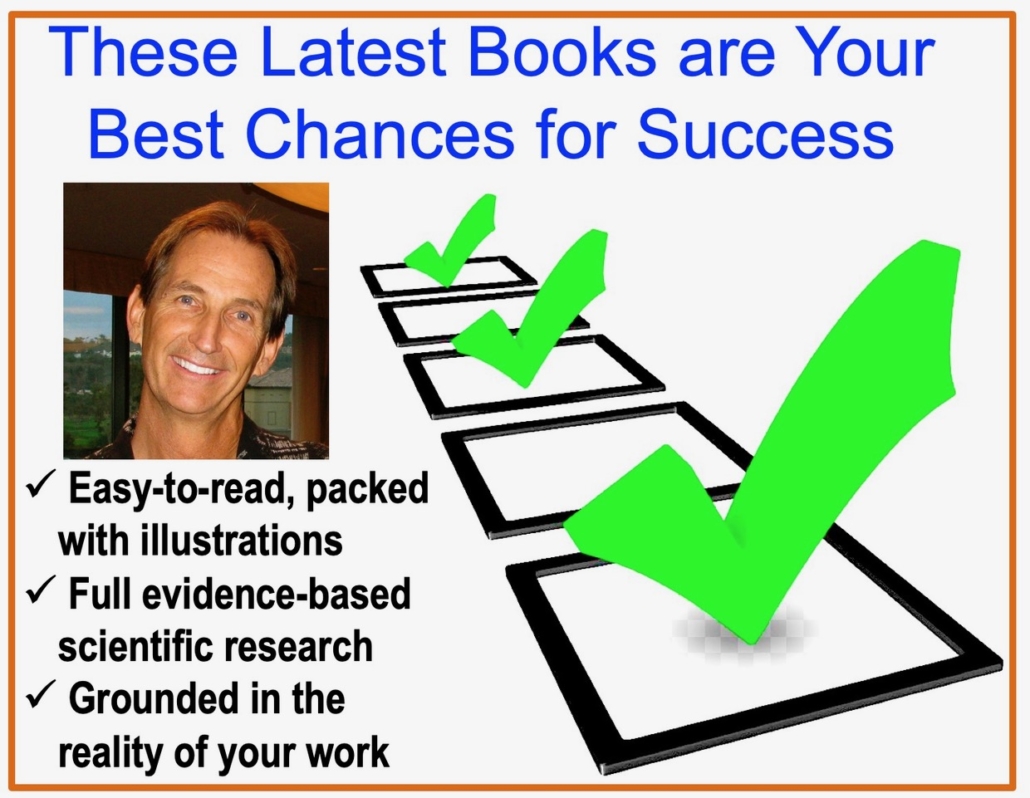
  • Easy-to-read
  • Evidence-based
  • Cuts to the chase
  • User-friendly
  • All new content
  • Bonus content in the appendix

An Inside Look at Eric Jensen’s Latest (and best) book so far

     Introduction…….

  1. Start with Yourself…
    As you grow, learn and raise your skill sets; your students will do the same.
  2. Conscious Connections…
    Foster empowering relationships using an equity mindset.
  3. Raise the Roof..
    Raise expectations for your students—and yourself.
  4. Equitable Environments…
    Create an in-group where all students feel a sense of safety and belonging.
  5. Rousing Relevance………
    Connect learning to life to help make meaning and change lives.
  6. Scaffold the Scorekeeping…
    Improve feedback and invite students to be your learning partners.
  7. From Discipline to Coaching…
    Reduce disruption and increase learning; the key is empathy.
  8. Cognitive Climbers………………………………………………………………..
    Build better brains and foster capacity.
  9. The Emerging You…………………………………………………………………
    Establish personal and professional habits for a lifetime of growth.

Start Salivating!

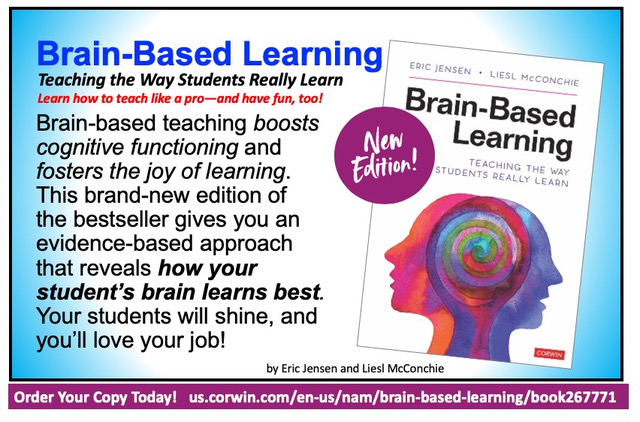
Brain-Based Learning  (new 3rd edition) is a “WOW” Feast  for Educators and Brain Junkies Alike

Why is This Flash News Bulletin Worth Reading?

This brand-spanking NEW edition of Brain-Based Learning is out! Here are just a few “wow” book gems. Did you know there’s a secretive brain chemical that boosts learner focus and long-term memory? In the book, you’ll discover the 3 simple (and quick)   ways you can invoke it for free (pg. 15). You’ll learn the 5 worst teacher-led social shaming ideas you should never use (pg. 76). Did you know that your brain has “nearly magic” motivators you can use to mobilize and energize even the most lethargic student? (pg. 128). Get the three nonconscious factors (nearly invisible to the naked eye) that are “must-haves” for your toolbox. Use them and reap double digit returns on student learning! (pg. 148). The best part? You can read this book and apply learning the VERY next day! Insights will be jumping out of your brain F-A-S-T!
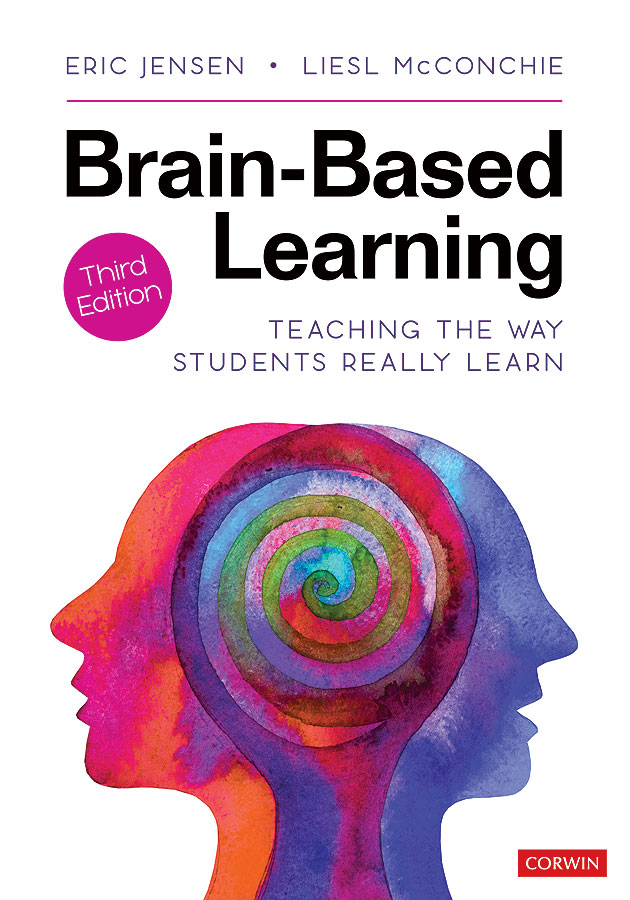
Brain-Based Learning By eric Jensen

Why Believe What You Are Reading?

What makes this NEW edition so good? First you get the partnership of two hungry “brain junkies: Eric Jensen and Liesl McConchie. Liesl has been “on board” as a brain junkie for years, she writes the monthly Bright Brain Bulletin and is a borderline obsessive-compulsive researcher who LOVES to get the science right, every time. This book is all about updated neuroscience with practical applications you can use immediately.

Eric has been an invitation-only member of the largest organization of neuroscientists in the world, the Society for Neuroscience. In addition, he’s a member of the President’s Club at Salk Institute of Biological Studies, one of the top research facilities in the world. He’s written over 30 books on the learning and the brain. This rare team of “brain junkies guarantees that what you learn in this remarkable jewel is the real deal.

Can I Prove This is Evidence-Based?

Many authors claim to have an “evidence-based” book or program. But when you look harder, it fails the test. If this new book sounds “too good to be true” it’s not. In fact, any skeptic of our work is about to get a cold shower. Brain-based Learning has 344 recent, peer-reviewed references from many of top neuroscience journals in the world such as Nature Neuroscience, Journal of Psychopharmacology and Trends in Cognitive Sciences. Yes, you’ll get the real deal; evidence you can trust.

But wait! How does our evidence translate to the classroom? Together we have over 50 years of experience in education, so we know the real world. Plus, we used studies from the Journal of School Health, Contemporary Educational Psychology and Journal of International Education Research. As the judge would say, “Case closed!”

What Makes This Book Unique?

Yes, I can guess there are other “brain books” on your bookshelf at home. But answer this question honestly: “How many times a week (or month) do you go back and pull out one of your older so-called “brain books” and get a NEW nugget or juicy tidbit you can use?

If the answer is, “Not very often,” maybe there just wasn’t much in those books. After all, most so called “brain-compatible” books lack the juicy partnership of hard science and real-world depth. So, how does this NEW edition of Brain-Based Learning differ from all the other “brain-books” out there?

There are just three simple answers: evidence, relevance and value. First, the book is packed with clear, compelling, peer-reviewed evidence from the world’s top journals. We got the science right, so you can use it with confidence. Secondly, relevancy was critical to us because it is critical to you. What you learn you can use immediately. Not a single paragraph in the book is wasted on fluff. You get definitive answers in areas like motivation, lesson planning and classroom movement. You will immediately see and use what you learn in your next workday.
Why is it Time to Purchase this Book Now?

Listen, you could buy ten OTHER BRAIN BOOKS and still not get the quality evidence and relevant practical tools you can use the very next day. We know your money is important, so here is a way to understand this investment in your career: your book is about 200 pages and this will remain relevant for 5-10 years.

Let’s say it is only good for five. That means the book price of $36 but it is $7.20 a year (over five years) or sixty cents a month. If you cannot prioritize sixty cents a month for the next five years to grow in your career, I just don’t know what to say. By the way, I do think your career growth is worth) far more than $0.60 a month.

Deciding to buy a book like this also comes partly down to who are you? Maybe learning and growing your own expertise is just not that important to you. If it is not, I understand.

But maybe you’re different from most of your colleagues. You have a growth mindset and identify as a lifelong learner. This book helps you grow because there’s no “fluff” or “marshmallow” content here. These are insights, strategies backed by science, you can use tomorrow at work. That’s why it’s worth your time (and money).

How Do You Purchase this Book Now?

Of course I’ll suggest Amazon. For that, you can CLICK HERE.

You may also order it from the publisher, Corwin Press.   My guess is the price will be similar, though shipping should be factored in, too. CLICK HERE.
Brain-Based Learning By eric Jensen

Do You Have Struggling Students?
Get Jensen’s Best Resource EVER!

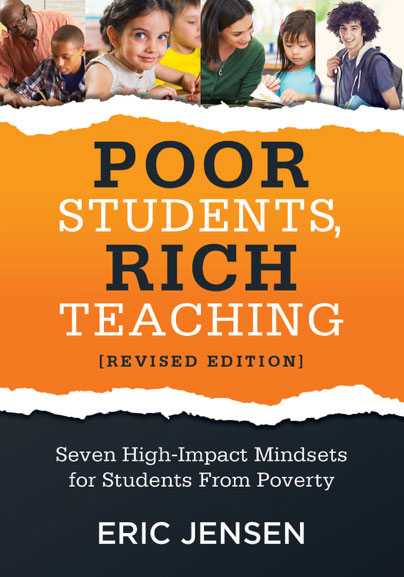
Poor Students, Rich Teaching

This fresh new book solves two important problems for every educator. First, it connects mindsets (of the teacher, not the student) to their teaching. This is powerful because highly effective teachers (those with more than one year of academic gains in a calendar year) will consistently outperform peers (those with the ineffective mindsets).

Second, it is the compilation of TWO books, so the book is strategy-packed and highly relevant for those who grow up in poverty.  You will get every critical issue addressed with tools you can use the very next day.

As you read this powerful book on poverty, you’ll learn many of the common issues that the poor face. They include chronic stress (which is why I have mind-bending chapters on optimism, relationships, hope, freedom, autonomy and choice).

The poor also face cognitive differences; they may be street smart, but struggle with the academic demands.  You’ll learn how to build the  “academic brain” (thinking, reasoning, memory, learn to learn and processing skills). Plus, you’ll get a powerful chapter on why you may want to manage the student’s “cognitive load.”

Finally, many poor deal with emotional issues that can be paralyzing. Emotions can be taught; learn which ones are hard-wired in our DNA and which ones should be taught every day. That’s why you’ll see chapters on changing the emotional set point (which has tools to reduce the adverse emotional states).

  • Get instant motivation and engagement with nearly EVERY student!
  • Learn the inside tools for fast relationship builders
  • Relish in the secrets to build cognitive capacity in high leverage ways

YES, the book is more expensive than many others. YES, it is the compilation and “Best of” two previous books of mine. YES, it is the equivalent of getting TWO books at once.

You’re going to LOVE this book.

Get The Book On Amazon

Motivate students to learn in the face of poverty using mindsets in the classroom:

  • Understand the urgency of poverty in the United States and how poverty affects education, student engagement, and academic achievement.
  • Learn how creating a positive school culture and a growth mindset for students can be beneficial in overcoming adversity.
  • Gain seven high-impact mindsets that bring change: the relational mindset, achievement mindset, rich classroom climate mindset, engagement mindset, positivity mindset, enrichment mindset, and graduation mindset.
  • Build effective teacher-student relationships, and help students see college and career readiness as a reachable target.
  • Create a welcoming classroom climate where all students love to learn, and drive student engagement, motivation, and success.

Get The Book On Amazon

Part One: Why the Relational Mindset? 

Chapter 1: Personalize the Learning
Chapter 2: Connect Everyone for Success
Chapter 3: Show Empathy
Parting Wisdom: Lock in the Relational Mindset

Part Two: Why the Achievement Mindset?
Chapter 4: Set Gutsy Goals
Chapter 5: Give Fabulous Feedback
Chapter 6: Persist With Grit
Parting Wisdom: Lock in the Achievement Mindset

Part Three: Why the Positivity Mindset?
Chapter 7: Boost Optimism and Hope
Chapter 8: Build Positive Attitudes
Chapter 9: Change the Emotional Set Point
Parting Wisdom: Lock in the Positivity Mindset

Part Four: Why the Rich Classroom Climate Mindset?
Chapter 10: Engage Voice and Vision
Chapter 11: Set Safe Classroom Norms
Chapter 12: Foster Academic Optimism
Parting Wisdom: Lock in the Rich Classroom Climate Mindset

Part Five: Why the Enrichment Mindset?
Chapter 13: Manage the Cognitive Load
Chapter 14: Develop Better Thinking Skills
Chapter 15: Enhance Study Skills and Vocabulary
Parting Wisdom: Lock in the Enrichment Mindset

Part Six: Why the Engagement Mindset?
Chapter 16: Engage for Maintenance and Stress
Chapter 17: Engage for Setup and Buy-In
Chapter 18: Engage to Build Community
Parting Wisdom: Lock in the Engagement Mindset

Part Seven: Why the Graduation Mindset?
Chapter 19: Support Alternative Solutions
Chapter 20: Prepare for College and Careers
Parting Wisdom: Lock in the Graduation Mindset

Also available:

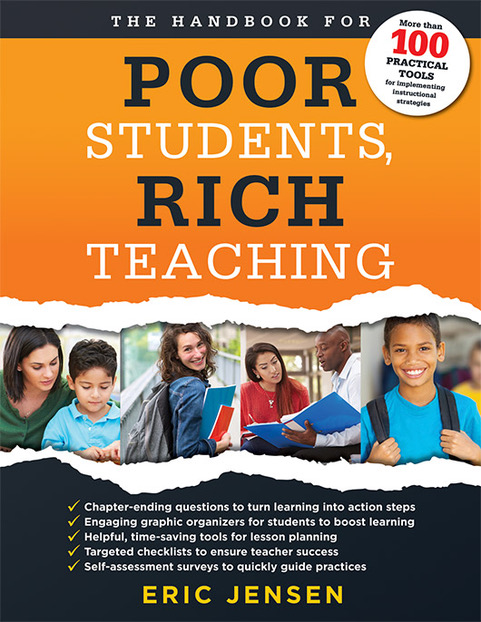
The Handbook for Poor Students, Rich Teaching

This  complementary handbook that helps foster the answers to, “Why are we doing this?” as well as the “How specifically do we make this happen?”

It is a rich, treasure trove of insights, hacks and solutions to the implementation of the work in a teacher’s daily classroom. You get countless free, downloadable reproducibles, plus ideas for book studies and short, valuable and relevant assignments that make the magic happen. Teachers love to have a companion for supporting their ideas and strategies and this new book partner is just what the “Learning doctor” prescribes. Buy these two books together and get ready for some results that get everyone excited and motivated to go the extra step.

Reviews

“Poverty is real, but it does not have to be an insurmountable obstacle to academic excellence. This handbook is research-based, comprehensive, and practical. Any educator serving students of poverty must have this book!”

—Anthony Muhammad, author and educational consultant

“The Handbook for Poor Students, Rich Teaching is set up to easily chunk staff learning for professional development, providing countless opportunities for immediate implementation while also continuing to learn. It is stacked with practical tools and opportunities for reflection on current and future practices. I am ready to buy a copy for each of my staff members!”

—Jacqueline Wyant, principal, Marshalltown High School, Iowa

“The Handbook for Poor Students, Rich Teaching is the perfect companion book to Poor Students, Rich Teaching. It includes research-based instructional practices that are doable, meaningful, and measurable. It offers many examples to illustrate self-reflective thinking and goal-setting, as well as creative ideas to use with students to inspire and engage them in shaping their own mindsets. It is also an excellent tool to use with colleagues as you collaborate to better understand what is necessary to create empathic classrooms for those students who most need our love and support.”

—Kathleen Kryza, international educational consultant, coach, and author

Engaging Students with Poverty in Mind: Practical Strategies for Raising Achievement

In this galvanizing follow-up to the best-selling Teaching with Poverty in Mind…

Renowned educator and learning expert Eric Jensen digs deeper into engagement as the key factor in the academic success of economically disadvantaged students. Too many of our most vulnerable students are tuning out and dropping out because of our failure to engage them. It’s time to set the bar higher. Until we make school the best part of every student’s day, we will struggle with attendance, achievement, and graduation rates. This timely resource will help you take immediate action to revitalize and enrich your practice so that all your students may thrive in school and beyond.

Teaching With Poverty in Mind: What Being Poor Does to Kids’ Brains and What Schools Can Do About It

In Teaching with Poverty in Mind: What Being Poor Does to Kids’ Brains and What Schools Can Do About It, veteran educator and brain expert Eric Jensen takes an unflinching look at how poverty hurts children, families, and communities across the United States and demonstrates how schools can improve the academic achievement and life readiness of economically disadvantaged students.

Jensen argues that although chronic exposure to poverty can result in detrimental changes to the brain, the brain’s very ability to adapt from experience means that poor children can also experience emotional, social, and academic success.

Teaching with the Brain in Mind, Revised 2nd Edition

Apply Cutting-Edge Brain Research to Your Teaching

This completely revised and updated ASCD best-seller is loaded with ideas for how to improve student achievement and create a more effective classroom by applying brain research to your teaching. Renowned author and educator Eric Jensen translates the latest scientific findings into effective instructional strategies, including: Why to start every class with opening activities that put students into receptive states. How to tempt students to focus more attention on learning tasks. Why to use compelling questions, personal stories, controversies, and celebrations in your teaching. How seating, room temperature, lighting, and noise affect learning. Why making your classroom a more positive social experience improves achievement.

Turnaround Tools for the Teenage Brain: Helping Underperforming Students Become Lifelong Learners

Powerful research-based strategies to turn around struggling adolescent students

The achievement gap is widening and more teens than ever are struggling in school. The latest research shows not only that brains can change, but that teachers and other providers have the power to boost students’ effort, focus, attitude, and even IQs. In this book bestselling author Eric Jensen and co-author Carole Snider offer teacher-friendly strategies to ensure that all students graduate, become lifelong learners, and ultimately be successful in school and life. Drawing on cutting-edge science, this breakthrough book reveals core tools to increase student effort, build attitudes, and improve behaviors.

Super Teaching: Over 1000 Practical Strategies

Empower students with proven strategies for brain-friendly instruction!

This revised fourth edition offers more than 1,000 brain research–based teaching strategies along with reflections, affirmations, sidebars, bulleted lists, quotable quotes, and a wealth of instructional tools. The author shows how to improve instructional effectiveness, plan standards-based lessons, and optimize student learning with practical techniques such as:

  • Matching instruction with learners′ developmental stages
  • Responding to unique learning styles with differentiated techniques
  • Using assessment as part of instruction
  • Addressing the learning needs of students in poverty
  • Managing students′ emotions with music and energizers
  • Practicing positive teaching mind-sets to enhance student results

Brain-Compatible Strategies (Volume 2)

Harness the transformative power of brain-based learning!
Thoroughly updated and revised, this best-selling book by brain expert Eric Jensen explores the key features of brain-based teaching and the most recent research on how the brain learns. This easy-to-read book is ideal for educators new to the concepts of brain-compatible learning and is organized into three simple, practical units, covering:

  • Background information to provide educators with a solid foundation in brain research
  • Seven principles of teaching based on essential brain concepts
  • Next steps to put the research and principles into practice

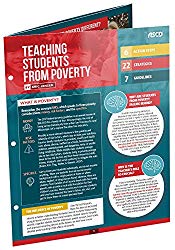
Teaching Students from Poverty (Quick Reference Guide)

Make THE Difference On The Go

This laminated guide from veteran educator Eric Jensen shows how poverty affects students and offers strategies, guidelines, and action steps to help teachers

  • Support students’ social-emotional skills.
  • Form and model strong relationships with students.
  • Lower student stress.

Whether your students are elementary, middle, or high school age, you’ll find strategies in this guide that will help you better understand and respond to the differing needs of this population.

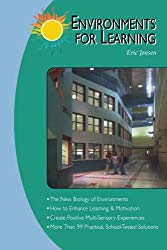
Environments for Learning

Formerly a publication of The Brain Store 

This book is packed with easy-to-use strategies and cutting-edge research to help you use ergonomics, lighting, temperature, color, and other factors to boost learning and student success.

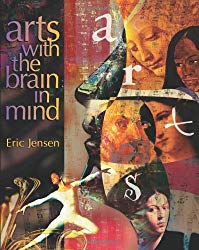
Arts with the Brain in Mind

Bring Out the Beauty in Your Classroom

Explains how to use musical, visual, and kinesthetic arts to enhance brain development, develop thinking skills, and make classrooms more positive and inclusive.